Arizona summers create conditions that change where scorpions rest, hunt, and enter structures. Intense daytime heat pushes them into cool, protected spaces, while warm nights give them more opportunity to move across patios, garages, block walls, and landscape edges. Monsoon moisture can also increase insect populations and disturb outdoor shelter, bringing scorpions closer to homes.
Scorpion activity is rarely connected to temperature alone. Food availability, irrigation, clutter, construction gaps, and changing weather all influence where sightings occur. Professional inspection helps connect those factors before treatment is placed, allowing the response to focus on active routes and the conditions supporting repeat movement.
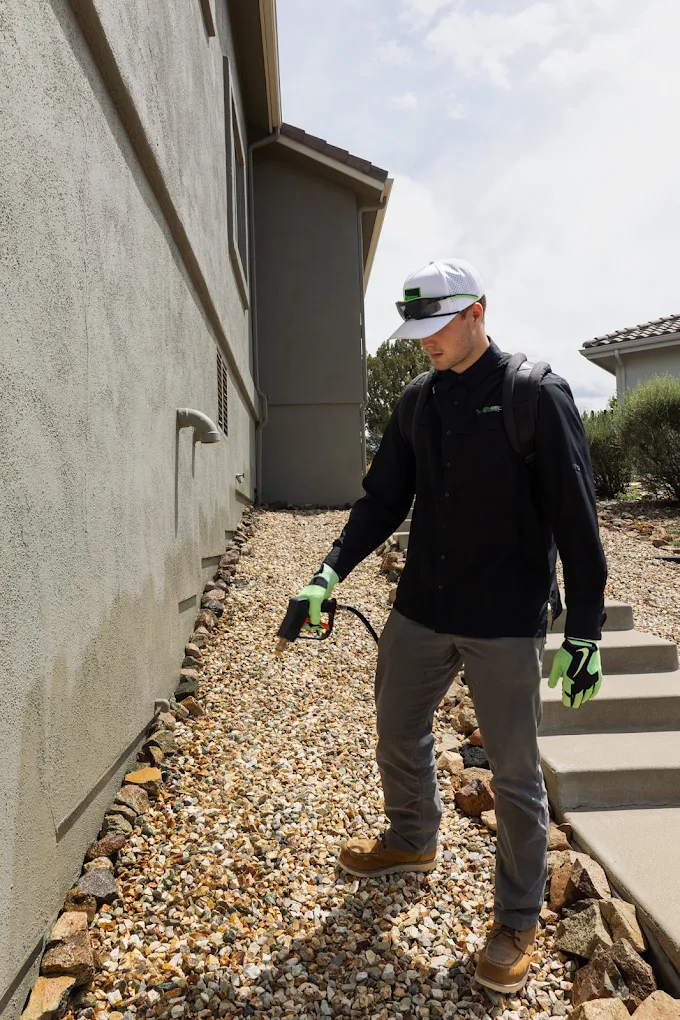
Heat Pushes Scorpions Into Cooler Shelter
Scorpions are well adapted to Arizona, but extreme surface temperatures still shape their daily behavior. During the hottest hours, they often remain beneath rocks, pavers, planters, stored items, bark, or equipment. Garages, laundry rooms, sheds, crawl-space edges, and foundation gaps can provide similar protection.
Common summer hiding areas include:
- Shaded spaces beneath patio furniture, planters, and outdoor storage
- Cracks around foundations, block walls, thresholds, and utility lines
- Rock borders, wood piles, landscape debris, and irrigation boxes
- Garages, sheds, and equipment areas with limited disturbance
- Cool interior edges near doors, baseboards, and plumbing openings
A single indoor sighting may be connected to a larger outdoor movement pattern. Technicians inspect the surrounding property so treatment does not stop at the room where the scorpion was found.
Early Sightings Can Signal Growing Pressure
One scorpion does not always mean a large infestation, but repeated sightings should not be treated as random. The broader lesson from early warning signs is that small clues often point to food, shelter, or access conditions already supporting activity.
Scorpions are nocturnal and can remain hidden for long periods. Homeowners may notice them after moving boxes, opening a storage area, walking outside at night, or finding one near a garage threshold. Waiting for sightings to become frequent can allow the same travel routes and shelter zones to remain undisturbed.
Professional evaluation helps determine whether activity is isolated, seasonal, or connected to nearby insects, rodents, or structural gaps. That distinction guides a more precise control plan.
Monsoon Moisture Increases Food And Movement
Summer monsoons can affect scorpion activity in two ways. Rain may disturb dry hiding areas and push scorpions toward higher or more protected ground. Moisture also supports ants, roaches, spiders, mosquitoes, wasps, and other small pests that can serve as prey.
Technicians may evaluate:
- Irrigation leaks, drains, and damp landscape beds near walls
- Exterior lights that attract insects toward patios and entrances
- Roach, ant, spider, or wasp activity around sheltered areas
- Debris shifted by storms near foundations and storage zones
- New cracks or gaps exposed by runoff, settling, or repairs
Reducing prey pressure is an important part of scorpion control. Treating only the visible scorpion may leave the food source and travel conditions unchanged, allowing activity to return.
Outdoor Living Areas Create Reliable Harborage
Patios, pool areas, outdoor kitchens, porches, and shaded seating spaces combine shelter, moisture, and insect activity. The guidance on safer outdoor spaces shows why furniture bases, cushions, pavers, planters, and storage corners deserve close attention.
A professional plan may include:
- Inspecting high-use evening areas and nearby landscape transitions
- Targeting cracks, wall edges, and confirmed scorpion travel routes
- Reducing webs, roaches, ants, and other supporting pest pressure
- Reviewing doors, garage seals, vents, and utility penetrations
- Scheduling follow-up as heat, rain, and insect activity change
Scorpions can use walls, fences, and foundation edges as protected pathways. Professionals look at how these features connect the yard to doors, garages, and indoor spaces before recommending exclusion or treatment.
Long-Term Control Requires Seasonal Adjustment
Arizona summer conditions do not remain constant. Extended dry heat may concentrate scorpions around irrigation and cooler structures, while monsoon storms can shift shelter and prey into different parts of the property. Landscaping growth, stored materials, and outdoor-use patterns can create new hiding places between visits.
Long-term control begins with inspection, targeted treatment, prey reduction, exclusion guidance, and monitoring. Technicians can compare current sightings with earlier findings, reinforce active zones, and adjust placement when movement changes. This is more effective than repeating the same one-time application without checking whether the pressure has shifted.
A complete approach also considers the pests the company handles, including ants, bed bugs, roaches, rodents, spiders, and scorpions. Bed bugs are not part of the outdoor scorpion food web, but the broader service scope allows technicians to identify when a separate household concern is present instead of assuming every sighting is connected.
Scorpion activity increases during Arizona summers because heat, nighttime movement, monsoon moisture, prey insects, and accessible shelter overlap. Professional control brings those conditions into one property-specific plan, helping reduce immediate sightings while addressing why scorpions continue approaching the structure.
Make Summer Evenings Feel Safer Again
Contact Green Gecko Pest Solutions for professional inspection, targeted scorpion control, prey-pressure reduction, exclusion guidance, and dependable seasonal follow-up.