Ant activity in outdoor spaces can quickly become more than a minor inconvenience. What often begins as a few visible trails can develop into widespread colonies that affect patios, walkways, gardens, and the perimeter of a home. Because ants are highly organized and adaptable, managing them requires more than a one-time solution.
Effective ant control focuses on understanding how outdoor conditions support colonies and how to reduce those conditions over time. A long-term approach helps limit activity while preventing ants from spreading into indoor areas.
Why Outdoor Spaces Attract Ant Colonies
Outdoor environments naturally provide everything ants need to survive. Food, water, and shelter are often readily available, making it easy for colonies to establish themselves.
Common factors that attract ants include:
- Moist soil that supports nesting and hydration
- Food sources such as crumbs, spills, or organic debris
- Shade and protection from landscaping features
- Cracks in hard surfaces that provide nesting sites
- Proximity to structures that offer additional shelter
These conditions allow ants to build colonies that expand over time. Once established, they begin sending out foraging trails that can extend across large areas.
Understanding these attractants is the first step in creating a more effective ant control strategy.
Identifying Where Ant Activity Begins
Ants rarely appear without a source. Most visible activity originates from nests that are located in soil, under structures, or within landscaping elements.
Common nesting locations include:
- Beneath pavers, stones, and concrete slabs
- Along foundation edges and walkways
- Inside mulch beds and garden areas
- Under outdoor furniture or decorative features
- Near irrigation systems or water sources
Locating these areas is essential for addressing the problem at its source. Without identifying where colonies are established, treatments may only reduce visible activity temporarily.
Seasonal patterns also play a role in how ant populations develop. This resource on warm weather ant prevention explains how changing conditions influence outdoor activity.
By focusing on where ants originate, control efforts become more targeted and effective.
Environmental Changes That Improve Ant Control
One of the most effective ways to manage ants outdoors is by adjusting the environment to make it less suitable for nesting and foraging. Small changes can significantly reduce activity over time.
Key environmental strategies include:
- Removing food sources by keeping outdoor areas clean
- Managing moisture to reduce water availability
- Trimming vegetation to limit shelter and access
- Repairing cracks in hard surfaces to eliminate nesting sites
- Reducing clutter that provides hiding areas
These adjustments help disrupt the conditions that ants rely on. They also reduce the likelihood of colonies forming near the home.
Consistency is important. Environmental changes must be maintained regularly to remain effective. Over time, these efforts contribute to a more stable and controlled outdoor space.
Targeted Ant Control Methods For Outdoor Areas
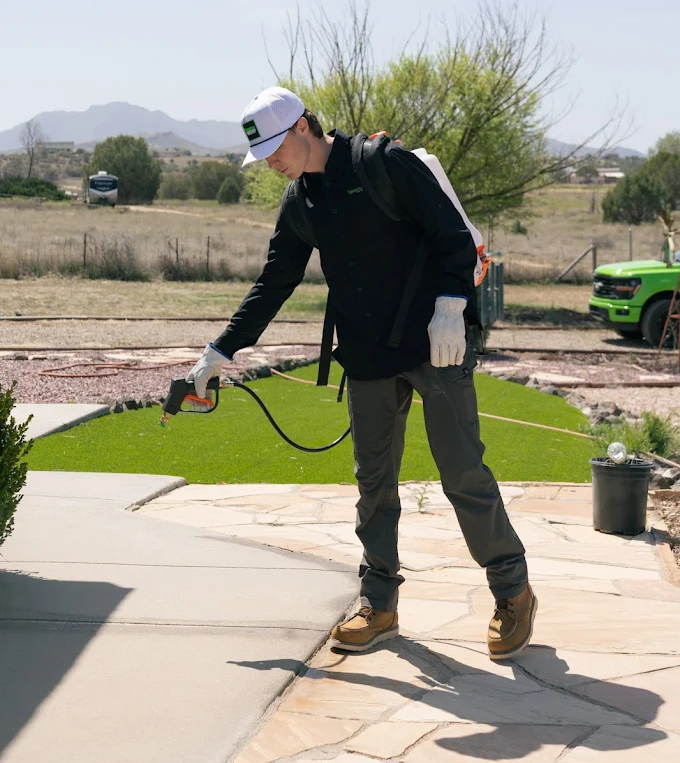
While environmental management is essential, targeted treatments are often needed to address active colonies. These methods focus on reducing populations while limiting disruption to the surrounding area.
Common approaches include:
- Applying treatments directly to nesting sites
- Creating barrier zones around high-risk areas
- Monitoring ant trails to identify patterns of movement
- Adjusting treatment timing based on activity levels
- Integrating multiple methods for better coverage
These strategies are designed to work together rather than relying on a single solution. By combining targeted treatments with environmental changes, ant control becomes more effective.
Different ant species may require different approaches, which is why understanding local pest behavior is important. This overview of seasonal pest activity trends highlights how various pests respond to environmental changes.
A tailored approach ensures that treatments address the specific conditions present in the outdoor space.
Preventing Ants From Moving Indoors
Outdoor ant activity often leads to indoor infestations if left unchecked. Once ants locate a reliable food source inside, they can establish consistent trails that are difficult to manage.
Preventive measures include:
- Sealing entry points along the foundation and exterior walls
- Keeping doors and windows properly sealed
- Maintaining clean indoor spaces to eliminate food sources
- Monitoring for early signs of indoor activity
- Scheduling regular pest control service to maintain protection
These steps create a barrier that limits the transition from outdoor to indoor spaces. By addressing outdoor colonies first, the risk of indoor infestations is significantly reduced.
Prevention is more effective than reactive treatment. Once ants establish themselves indoors, managing them becomes more complex.
Why Long-Term Pest Control Delivers Better Results
Ant control is not a one-time process. Colonies can reestablish themselves if conditions remain favorable, making ongoing management essential.
A long-term approach provides:
- Continuous monitoring of outdoor activity
- Early detection of new colonies
- Adjustments based on seasonal changes
- Consistent protection around the property
- Reduced the likelihood of recurring infestations
This approach ensures that ant control remains effective over time. It also reduces the need for repeated one-time treatments that may only provide temporary relief.
Professional pest control services bring the expertise needed to manage these factors consistently. They provide structured solutions that adapt to changing conditions and deliver more reliable results.
Creating A More Controlled Outdoor Space
Managing ant activity outdoors requires a combination of awareness, environmental adjustments, and targeted treatment. By addressing the factors that attract ants, homeowners can create a space that is less conducive to infestation.
A balanced approach ensures that outdoor areas remain functional and comfortable without becoming a source of ongoing pest problems. It also supports long-term protection by reducing the likelihood of new colonies forming.
Effective ant control is about maintaining stability. By focusing on prevention and consistency, outdoor spaces can remain enjoyable and pest-free.
Take control of your outdoor spaces with confidence
If any ant activity continues to disrupt your outdoor areas, a structured approach can provide more reliable results. Connect with Green Gecko Pest Solutions to explore ant control solutions designed for long-term protection and consistent performance.